

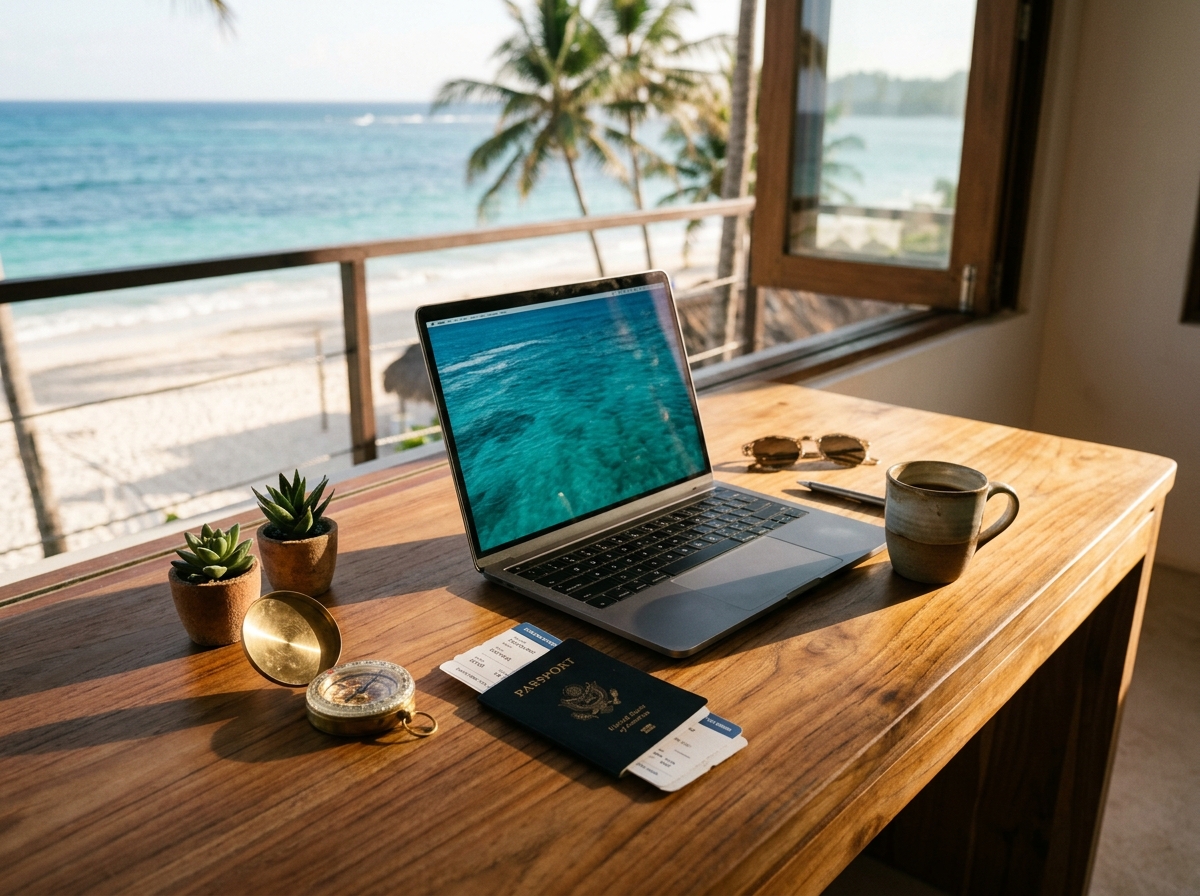
The fastest way to promote a travel business online now is a stack of four things: a locally optimized Google profile, a conversion-focused website, consistent reviews, and content structured to get cited by AI search tools. While industry resources like //stayatholiday.com/ frequently break down modern discovery strategies, most generic guides stop at the first three and ignore how AI Overviews and chatbots now decide who gets mentioned.
This guide covers both halves: classic visibility and the newer AI citation game that increasingly decides who shows up first.
Claim And Optimize Your Google Business Profile
Google holds roughly 90 percent of search market share, so this is where most clients will look first. A complete, accurate profile directly affects whether you show up in local results at all.
Home-based travel businesses hit one snag here. Google Business Profiles officially require physical contact with customers at a listed address.
Fix this by leaving your address field blank and selecting “service area business” instead. You can still choose a service radius and show up in local search results without exposing a home address.
Keep these fields current:
- Business category set specifically to travel agency //stayatholiday.com/the-5-4-3-2-1-rule-for-stress-free-travel/ or travel advisor
- Service areas listing every region you actually book for
- Photos updated quarterly, not just at setup
- Posts published monthly to keep the profile active
Build A Website That Converts, Not Just Exists
A website works as more than a digital business card. It needs to answer three questions fast: who you serve, what you specialize in, and how someone books a call with you.
Put your niche and a clear call to action above the fold. Visitors decide whether to stay within seconds, so burying your specialty under a hero image of a beach helps nobody.
Structure the site so both humans and search engines understand it:
- A homepage linking clearly to services, an FAQ page, and contact
- Destination or niche landing pages targeting specific search terms
- A blog section for ongoing content, covered next
- Mobile-first layout, since most searches now happen on phones
Turn Reviews Into Your Strongest Marketing Asset
Ninety percent of consumers read reviews before choosing a business, and the pattern holds strongly for travel. Reviews also directly influence whether you appear in Google’s local map pack.
Timing matters more than volume. Ask for a review within days of a client’s return, while the trip still feels vivid, rather than waiting months.
Make requesting reviews a repeatable habit:
- Add a review link to your post-trip follow-up email
- Include a QR code on invoices that links straight to your review page
- Mention it briefly during the post-trip thank-you call
- Respond professionally to every negative review instead of ignoring it
Businesses with average ratings above roughly 4.1 stars tend to win the competitive local map pack spots. Consistent fresh reviews matter more than a handful from years ago, since most consumers discount reviews older than a few months.
Create Content That Answers Real Questions
Destination guides, packing tips, and “what to know before visiting” articles do double duty. They rank in traditional search and they’re exactly the format AI tools prefer to cite.
Write for the specific questions your clients actually ask, not generic topics. “Best time to visit Portugal with kids” beats a vague “Portugal travel guide” for both ranking and conversion.
Favor these content types:
- Destination deep dives tied to your niche specialty
- Comparison posts, such as two resorts or two cruise lines side by side
- Seasonal guides published ahead of booking windows
- Short video or photo recaps from your own recent trips
Get Found Inside AI Overviews And Chatbot Answers
This is the part almost every other guide skips, and it now shapes a growing share of search traffic. AI Overviews appeared in roughly a quarter of Google searches in early now, up sharply from under a third of that a year earlier, and the share keeps climbing.
Google Search Console now includes a dedicated Generative AI performance report, launched in mid-now, so you can track this directly instead of guessing. Getting cited here means a chatbot or AI Overview mentions your business by name when someone asks a travel question, often before they ever click a link.
Structure content so AI systems can lift it cleanly:
- Answer the core question in the first two or three sentences, since roughly 44 percent of AI citations pull from the opening portion of a page
- Use clear FAQ sections with direct, one-sentence answers under each question
- Add FAQ and LocalBusiness schema markup so search engines parse your content correctly
- State specific numbers, dates, and named entities instead of vague claims
- Add an “Updated: [Month Year]” timestamp and actually refresh content regularly
Source diversity matters here too. Reddit alone accounts for roughly a fifth of all AI Overview citations across topics, and YouTube accounts for close to a quarter, so a presence on both platforms genuinely helps beyond their normal social value.
Avoid obvious AI-written filler. Search systems increasingly deprioritize generic preambles and reward original insight, specific data, and a clear point of view instead.
Build An Email List That Keeps Clients Coming Back
Email gives you direct access that no algorithm can bury. A monthly newsletter keeps you top of mind for the next trip, or for a referral when a friend starts planning one.
Automate the moments that matter most instead of trying to remember every touchpoint manually. A welcome sequence, a post-trip follow-up, and a re-engagement email for cold leads cover most of the value.
Keep content genuinely useful, not just promotional:
- Destination spotlights tied to upcoming booking seasons
- A free packing list or planning checklist as a list-building incentive
- Real client stories and trip recaps
- Clear, simple calls to action, never more than one per email
Pick The Right Social Platforms, Not All Of Them
Spreading thin across five platforms produces weak results everywhere. Pick one or two where your actual target client already spends time.
Instagram and TikTok suit visual destination content and behind-the-scenes planning. Facebook groups work well for reaching an older, often higher-spending demographic that still books full-service trips.
Pinterest deserves more attention than most travel marketing guides give it. People use it specifically to plan future trips, which makes its search intent unusually high compared to other platforms.
Post with purpose, not just frequency:
- Room tours and “just booked” posts showing real bookings in progress
- Post-trip recaps with specific, personal details, not generic beach photos
- Direct engagement in comments and DMs, which builds trust faster than polish
- Occasional reposts from suppliers or your host agency to fill gaps
Launch A Referral Program That Costs Nothing Upfront
A referral program formalizes something that already happens informally. Personal recommendations carry more weight than any ad, and you only pay out once a referral actually books.
Keep the structure simple enough to explain in one sentence. A discounted planning fee per successful referral, or a waived fee after five, both work without complicated tiers.
Announce it clearly and repeat the announcement. Mention it in your post-trip email, again on social media, and once more in your newsletter, since most clients forget a program they heard about only once.
Partner With Complementary Businesses And Niche Influencers
Cross-promotion with non-competing businesses multiplies your reach without ad spend. A honeymoon specialist partnering with a wedding photographer, or an adventure travel advisor partnering with a gear shop, both work because the audiences overlap without competing.
Influencer partnerships work best when the influencer’s niche matches yours tightly. A broad “travel influencer” with huge followers converts worse than a smaller creator whose audience already wants exactly what you sell.
Structure partnerships around mutual benefit:
- Co-marketing campaigns splitting costs between both businesses
- Guest content exchanges, such as a blog swap or joint video
- A bundled offer combining both businesses’ services for one client
Know When Paid Ads Make Sense
Paid social and search ads work, but they’re not where most advisors should start. Get organic channels generating steady leads first, then layer paid spend on top once you know which content already converts.
Budgets for working advisors typically run from 50 to 500 dollars a month, scaling with results rather than guesswork. Boost a post that’s already performing well organically instead of guessing at a brand-new creative.
Track What’s Actually Working
A handful of numbers tell you where to double down and where to stop wasting time. Most advisors can track all of this with free tools, no dedicated software required.
Check monthly:
- New inquiries, and whether that number moves after a specific change
- Inquiry source, asked directly of every new client
- Website traffic through Google Analytics
- AI Overview appearances through Search Console’s Generative AI report
- Email open and click rates through your email platform
Final Thoughts
Promoting a travel business online in now means doing the fundamentals well: a clean Google profile, a converting website, and consistent reviews, while also building content that AI search tools can actually cite. Most competitors are still ignoring that second half entirely, which is exactly the gap worth filling first.
Ready to start? Pick one underused channel from this list, most likely AI-structured content or Pinterest, and commit to it for 90 days before judging results.
Frequently Asked Questions
How do travel agents get found on Google?
A complete Google Business Profile, destination-specific content, and consistent recent reviews are the three strongest factors for local visibility.
What social media platform works best for travel agents?
Instagram and TikTok suit visual storytelling, while Pinterest captures travelers actively in the planning phase with unusually high search intent.
How much should a travel business budget for marketing?
Most advisors start with free organic channels and add 50 to 500 dollars monthly in paid ads only once those channels show results.
Do I need a website if I already have social media?
Yes, since a website gives you control over SEO, AI citation structure, and conversion that a social profile alone cannot provide.
How do I get my travel business cited in AI Overviews?
Front-load direct answers in the first few sentences, add FAQ schema markup, and keep content updated with specific, current details.





Leave a Reply