

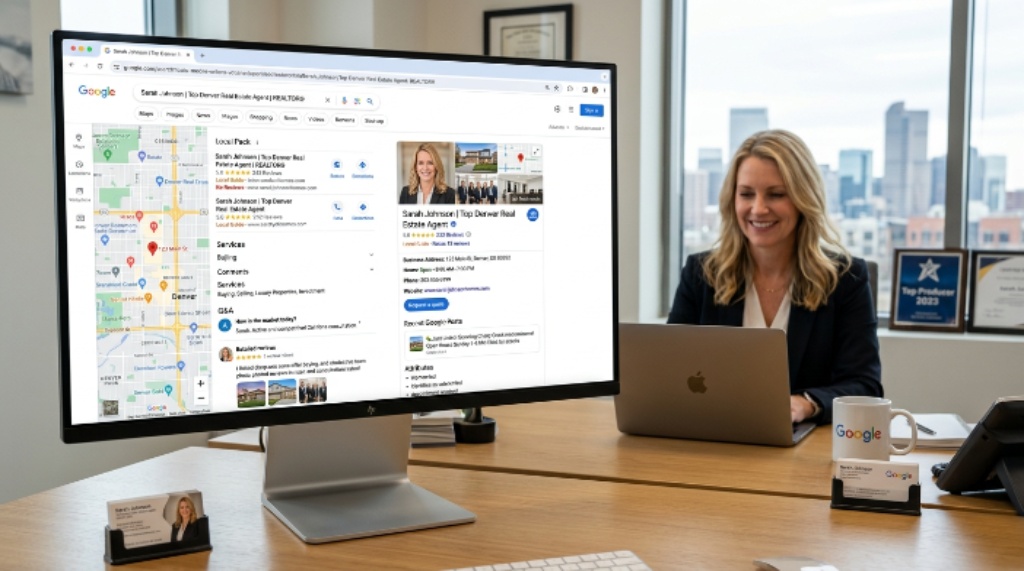
Most real estate agents believe ranking on Google requires a big budget, a technical team, or years of waiting. That belief is wrong. The agents consistently showing up at the top of local search results are not necessarily spending the most on ads. They are simply doing a small number of things very well — and most of their competitors are not doing them at all.
This article breaks down exactly what those strategies are, why they work, and how you can apply them to your own real estate business starting today.
The Surprising Truth About Google Rankings in Real Estate
Here is what most agents do not realize. Google does not just reward the most popular agent in a market. It rewards the most relevant and trustworthy one for each specific search, which is why partnering with a specialized link building service provider in real estate can make all the difference. A buyer typing “homes for sale in Riverside Heights” is not looking for the biggest real estate brand in the city. They want the agent who knows Riverside Heights best.
That distinction changes everything. It means a solo agent who focuses on one neighborhood can outrank a large brokerage with a massive advertising budget. Additionally, it means that the path to Google’s first page is far more accessible than most agents think.
According to recent data, 97 percent of home buyers use the internet at some point during their search. Furthermore, the Google Local Pack — the three map results that appear at the top of local searches — captures 79 percent of all clicks. Getting into that top three is worth more than any paid ad campaign running simultaneously.
What the Google Local Pack Actually Is
Before diving into strategy, it helps to understand how Google displays local results. When someone searches for a real estate agent or homes in a specific area, Google typically shows two types of results: the Local Pack and the organic listings below it.
| Result Type | What It Shows | Where It Appears |
| Local Pack (Map Pack) | Top 3 local businesses with map | Top of results page |
| Organic Listings | Website pages ranked by relevance | Below the Local Pack |
| Paid Ads | Sponsored results | Above everything |
The Local Pack drives the most clicks for local searches. Organic listings still matter, however, especially for content-driven searches like “best neighborhoods in Austin” or “how much are closing costs in Texas.” Top-performing agents appear in both.
Strategy One: Treat Your Google Business Profile Like a Marketing Asset
This is the single biggest missed opportunity in real estate digital marketing. According to BrightLocal data, 68 percent of agent Google Business Profiles are either incomplete or unclaimed. Meanwhile, a fully optimized profile accounts for roughly 32 percent of Local Pack ranking weight.
Most agents claim their profile, add a phone number, and never touch it again. That approach leaves enormous ranking potential on the table. The agents winning the Local Pack treat their profile as a living asset that they update consistently.
What a fully optimized profile includes:
- A complete business description that naturally mentions the neighborhoods and services you offer
- Weekly Google Posts sharing market updates, new listings, or local community content
- Fresh photos added regularly, including neighborhood shots, team photos, and recent listings
- All service categories filled out accurately and completely
- Questions in the Q&A section answered promptly and thoroughly
Additionally, Google’s Gemini AI now pulls from Business Profile content when generating conversational answers to searches like “who is the best real estate agent in Scottsdale for first-time buyers?” Agents with active, keyword-rich profiles are far more likely to appear in those AI-generated results.
Strategy Two: Build Neighborhood Pages, Not City Pages
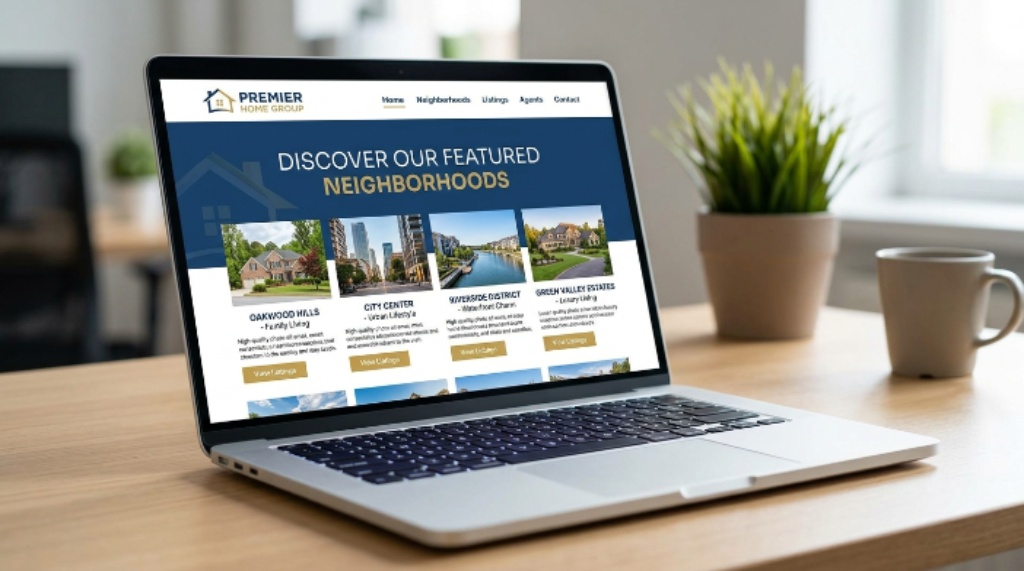
Most agent websites have a homepage, an about page, and a contact form. Some have a blog. Very few have dedicated landing pages for each neighborhood they serve. This is where the real ranking opportunity lives.
Consider the difference between two search terms. “Homes for sale in Chicago” has enormous competition. Zillow, Realtor.com, and Redfin dominate it. However, “homes for sale in Lincoln Square Chicago” has far less competition and attracts buyers who are closer to making a decision. Neighborhood-level pages have three to five times less competition than city-level pages, and they convert at twice the rate.
A strong neighborhood page includes:
- Current market data specific to that neighborhood, updated monthly
- School information, local amenities, and community details
- A map showing neighborhood boundaries
- Recent sales data and typical price ranges
- A buyer or seller guide written specifically for that area
These pages rank because they give Google exactly what it wants — genuinely useful, locally specific information that serves the searcher. Therefore, building one solid neighborhood page per month is one of the highest-return activities a real estate agent can do online.
Strategy Three: Build a Review System, Not Just a Review Request
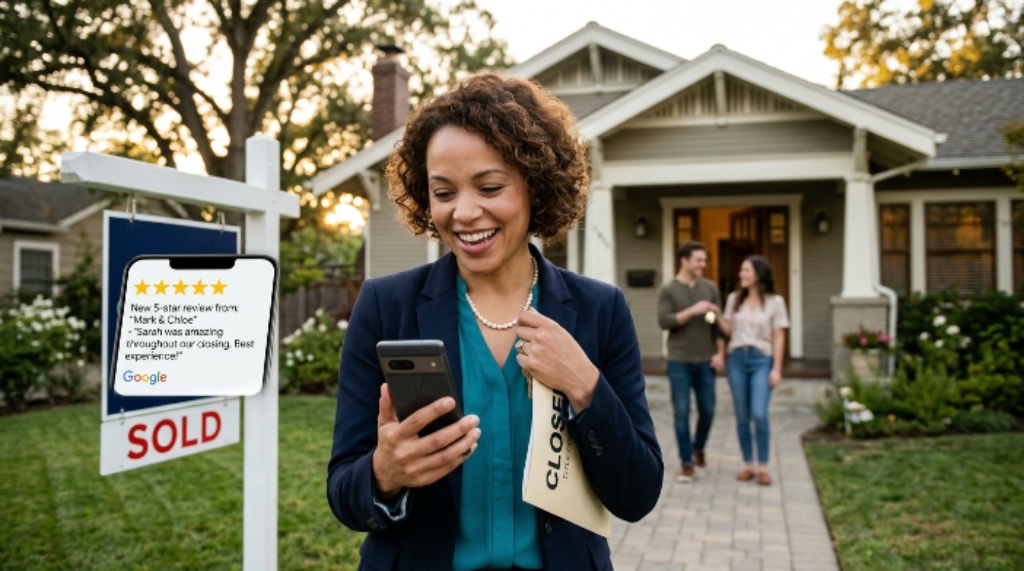
Reviews are a ranking factor that most agents treat as an afterthought. They ask for a review at closing, maybe once, and hope for the best. Top-ranking agents run a systematic approach that generates consistent, high-quality reviews over time.
A real estate agent with 85 Google reviews averaging 4.8 stars will consistently outrank a comparable agent with 12 reviews, even in competitive markets. The volume matters. The recency matters. And surprisingly, the content of the reviews matters too.
Google’s AI reads review text and uses it as a signal for what the agent specializes in. An agent whose reviews repeatedly mention “Oak Park,” “first-time buyers,” and “quick closings” will rank more prominently for those specific searches. Therefore, prompting clients to mention specific details in their review — the neighborhood, the type of transaction, what stood out — pays dividends in ranking visibility.
A simple review system looks like this:
- Send a direct Google review link within one week of closing, while the experience is fresh
- Personalize the message rather than using a generic template
- Respond to every review within 48 hours, both positive and negative
- Ask clients to mention the neighborhood and transaction type naturally
Strategy Four: Target Long-Tail Searches That Buyers Actually Type
Broad keywords like “homes for sale” or “real estate agent” are dominated by major platforms with enormous authority. Agents who try to compete for those terms spend years waiting for results that may never come.
The smarter path is long-tail keywords — specific, longer phrases that reflect what real buyers and sellers actually search for when they are close to making a decision.
| Broad Keyword | Long-Tail Alternative | Intent Level |
| Homes for sale | Homes for sale in [Neighborhood] under $400K | High |
| Real estate agent | Best real estate agent for first-time buyers in [City] | High |
| Condos for sale | New construction condos in [Neighborhood] [City] | Very High |
| Real estate market | [Neighborhood] real estate market report June 2026 | High |
| Selling my home | How much is my home worth in [Zip Code] | Very High |
Each of these long-tail phrases represents a buyer or seller who is ready to take action. They are not browsing. They are searching with purpose. Additionally, these phrases have far less competition, which means a well-written page targeting them can rank within weeks rather than months.
Strategy Five: Create Content That Answers Real Questions
Google’s core mission is to provide the most helpful answer to any search query. Agents with websites that only show listings and a contact form give Google nothing useful to rank. Content is what changes that equation.
The most effective content types for real estate agents in 2026 are not generic blog posts about buying a home. They are hyper-specific pieces that answer questions buyers and sellers in your market are actually typing into search.
Strong content examples include:
- Monthly market reports for each neighborhood you serve, such as “Lincoln Square Real Estate Market Report — June 2026”
- Buyer guides specific to your market, such as “First-Time Buyer’s Guide to Purchasing a Home in Oak Cliff, Dallas”
- Lifestyle content like “Best Schools, Parks, and Coffee Shops in [Neighborhood] in 2026”
- Process explainers like “How Much Are Closing Costs in Florida in 2026?”
- Video neighborhood tours embedded directly on your website, which benefit from Google’s ownership of YouTube
Each piece of content you publish is essentially a new door into your website from search. One neighborhood guide can generate leads for three to five years without additional effort after the initial post. That compounding return makes content one of the highest-leverage investments available to any agent.
Strategy Six: Keep Your Name Consistent Everywhere Online
This one is simple but widely ignored. Google verifies the legitimacy of local businesses partly by cross-referencing how their name, address, and phone number appear across the web. This is known as NAP consistency — Name, Address, and Phone.
If your business appears as “Jane Smith Realty” on Google but “Jane Smith Real Estate Services” on Zillow and “JS Realty” on Yelp, Google sees inconsistency. That inconsistency reduces trust and, therefore, reduces ranking.
Top agents audit every directory listing annually and ensure every version of their business information matches exactly. This includes Zillow, Yelp, Facebook, the local chamber of commerce, and any industry directories where their name appears.
How Long Does It Take to See Results?
This is the most common question agents ask, and the honest answer varies by strategy.
| Strategy | Time to See Early Results | Time to Consistent Results |
| Google Business Profile optimization | 30 to 60 days | 3 to 6 months |
| Neighborhood landing pages | 4 to 8 weeks | 6 to 12 months |
| Review building | 30 to 90 days | Ongoing |
| Long-tail content creation | 4 to 12 weeks | 6 to 18 months |
| NAP consistency audit | Immediate fix | 30 to 60 days impact |
The strategies that produce results fastest are Google Business Profile optimization and review building. Neighborhood pages and content take longer but deliver lasting, compounding results that paid ads cannot replicate.
Conclusion
Winning Google’s first page as a real estate agent is not about outspending competitors or mastering complex technology. It is about being more relevant, more consistent, and more genuinely helpful than the agents in your market who are doing the minimum. The six strategies covered here — optimizing your Google Business Profile, building neighborhood pages, running a review system, targeting long-tail searches, creating locally specific content, and maintaining NAP consistency — work together as a system. Each one reinforces the others. Agents who invest in these strategies generate leads at significantly lower cost than paid advertising over time, and they build an online presence that grows stronger every month. Start with your Google Business Profile this week. Add a neighborhood page next month. The results will follow.
Frequently Asked Questions
How long does it take for a real estate agent to rank on Google’s first page?
It depends on the strategy and competition level. Google Business Profile improvements can show early results within 30 to 60 days. Neighborhood landing pages and content typically take six to twelve months to rank consistently. Long-tail searches with less competition tend to produce results faster than broad city-level terms.
Do real estate agents need to pay for ads to appear on Google’s first page?
No. Organic search results and the Google Local Pack both appear without paid advertising. Agents who invest in local SEO strategies — particularly Google Business Profile optimization, neighborhood content, and review building — can rank prominently without ongoing ad spend. SEO generates leads at an estimated 61 percent lower cost than paid ads over a twelve-month period.
What is the most important ranking factor for real estate agents on Google?
The Google Business Profile is the single most important factor for Local Pack rankings, accounting for roughly 32 percent of ranking weight. However, neighborhood-specific content, review quantity and quality, and consistent business name and address information across the web all play significant supporting roles.
How many Google reviews does a real estate agent need to rank well?
There is no fixed number, but agents with more reviews consistently outrank those with fewer, especially when combined with a strong average star rating. Research shows agents with 85 or more reviews averaging 4.8 stars regularly outperform agents with 12 reviews in competitive local markets. The recency and content of reviews also matter significantly.
Should real estate agents target city-wide keywords or neighborhood keywords?
Neighborhood-level keywords almost always produce better results for individual agents. City-wide terms like “homes for sale in Dallas” are dominated by large platforms like Zillow and Realtor.com. Neighborhood-specific terms have three to five times less competition and attract buyers who are further along in their decision-making process, resulting in higher conversion rates.





Leave a Reply