


You can spot future tech trends before your competitors by watching the right signals, talking to the right people, and moving faster than everyone else. It’s not about having a crystal ball. It’s about building a repeatable system for noticing change while it’s still small.
Most companies react to trends only after they become headlines. By then, they’re competing with everyone else who read the same article. The companies that win aren’t smarter than their competitors. They’ve just built habits that catch weak signals early, and they trust those signals enough to act on them.
This article shows you how to build that system. You’ll learn which sources to watch, how to tell a real trend from hype, and which mistakes cause even smart teams to miss what’s coming.
Why Most Teams Miss Trends Until It’s Too Late
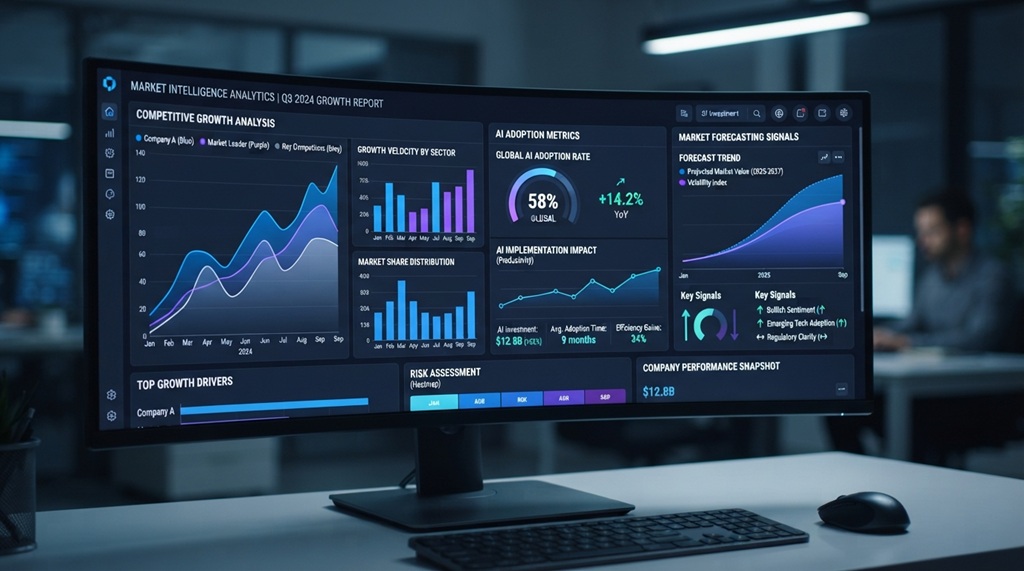
Most teams miss trends because they only check mainstream sources. Mainstream sources report trends after they’ve already gone mainstream. By the time a trend hits a major news outlet, early movers already have months of head start sometimes years.
Three things usually cause this.
Everyone Reads the Same Few Sources
If your whole team reads the same three tech blogs and follows the same influencers, you all see the same filtered, delayed version of reality. Spotting trends early means diversifying your inputs. It doesn’t mean consuming more content from an already-narrow pipeline.
Teams Confuse Signal With Noise
Not every new tool or buzzword is a trend. Most fade within a quarter. The real skill isn’t finding new things. It’s telling a genuine shift apart from a short-term spike in attention.
No One Owns the Job
Many companies don’t assign anyone to watch the horizon. Trend awareness becomes a side task instead of an ongoing habit. Signals get missed simply because no one was looking for them.
Where Real Trend Signals Actually Come From
Real signals show up in technical, niche, and unfiltered spaces long before mainstream coverage. Builders and early adopters talk before marketers do. Knowing where to look matters more than how often you look.
Developer and Research Communities
GitHub trending repositories, arXiv preprints, and technical forums often reveal what people are building months before commercial products appear. When several unrelated projects start tackling the same problem, that cluster is a strong early signal.
Patent Filings and R&D Announcements
Patent activity moves slower, but it’s highly reliable. It reflects long-term investment decisions, not short-term hype. Track patent filings in a specific category over several quarters. You’ll often see where big players are quietly placing bets.
Startup Funding Patterns
When several unrelated venture funds back companies in the same narrow niche within a short window, that’s rarely a coincidence. Investors are independently arriving at the same thesis. Watch seed and early-stage rounds, not just late-stage headline deals, to catch trends earlier.
Niche Communities Before Mass Platforms
Discord servers, specialized subreddits, and industry Slack groups discuss practical use cases long before a technology reaches mainstream social media. By the time a topic trends on a major platform, the niche community has often moved on to something new.
How to Separate a Real Trend From Temporary Hype
A real trend shows steady, independent adoption across unrelated groups over time. Hype spikes fast around one event, then fades just as quickly. Telling the two apart is the most valuable skill in this whole process.
Ask these questions before you commit resources to something new:
- Is adoption spreading across industries, or staying inside one hype cycle? Real trends jump categories. A technology used first in gaming might show up next in healthcare.
- Are people solving real problems with it, or just talking about it? Genuine trends produce use cases and complaints about limitations. Hype produces think-pieces.
- Does interest last after the launch buzz fades? Track search interest, community activity, or funding over six to twelve months. Don’t judge based on launch-week noise alone.
- Would this still matter without a marketing budget? If interest depends entirely on paid promotion or one influential voice, it’s more fragile than it looks.
Industry experts who study innovation cycles often point to one thing: the gap between early adopter interest and mainstream awareness. That gap is where the real competitive advantage lives, because it gives a smaller, faster company time to build expertise before the market gets crowded.
Institutionalizing Trend Intelligence: From Signal Detection to Scalable Execution
A competitive trend-tracking system must be structured, scheduled, and shared—never relegated to ad hoc discovery. Relying on passive awareness invites fragility; the moment your resident enthusiast leaves, your strategic foresight vanishes with them. True market advantage lies in bridging the gap between early detection and decisive action. Spotting emerging signals is merely the catalyst—the real commercial payoff belongs to organizations built for rapid execution. Once a high-potential market shift is identified, leaders require a clear roadmap to integrate these advancements before competitors take notice. To bridge this critical gap between strategy and execution, leverage emerging AI trends to scale your growth.
Create a Simple Signal Log
Keep a running document where anyone on the team can log something unusual. A repeated question in a forum. A strange new product category. A spike in a niche community. Alone, each entry means little. Reviewed together each month, patterns start to emerge.
Set a Recurring Review Cadence
Block time each week or every other week to review signals not to consume more content. Use that time to spot patterns. Are the same themes showing up from unrelated sources? That repetition is the real signal, not any single article or post.
Assign Ownership, Even Informally
Someone should own horizon-scanning, even as a rotating task rather than a full-time role. Without clear ownership, trend-watching quietly becomes nobody’s job during busy periods. That’s exactly when early signals slip through.
The Underrated Angle Most Guides Skip: Track What Competitors Deprioritize

Most trend-spotting advice focuses on what’s gaining attention. But watching what established competitors quietly abandon tells you just as much. When a major player stops investing in a feature or shifts messaging away from a category, it usually means one of two things: the space is genuinely dying, or a bigger player has decided it can’t win there and is stepping back.
The second case creates real opportunity. Smaller, faster companies can spot an opening precisely because a competitor’s retreat had nothing to do with shrinking demand. It came from internal priorities, resourcing, or a failed execution. Company blog archives, product changelogs, and hiring patterns often reveal this kind of signal before anyone discusses it publicly.
This reverse approach watching for retreat, not just advance gives you a fuller picture. Few teams actually do it.
Turn Early Signals Into Action Without Overcommitting
Spotting a trend early only helps if you pair it with a low-risk way to test it. At this stage, you don’t need certainty. You need structured experiments that limit your downside while keeping the upside of being early.
Try these steps:
- Run small, time-boxed pilots. A two-to-four-week internal test costs far less than a full product pivot, and it still gives you real data.
- Talk directly to early adopters. A handful of conversations with people already using the technology often reveals more than months of research.
- Set kill criteria in advance. Decide upfront what “this isn’t working” looks like. That way, enthusiasm doesn’t turn into sunk-cost thinking.
- Document what you learn either way. Even a trend that fails teaches your team something about evaluating the next one faster.
Frequently Asked Questions
How far in advance can most tech trends realistically be spotted?
It varies, but strong signals often appear six months to two years before a trend reaches mainstream awareness. The exact window depends on how complex the technology is and how much infrastructure it needs before mass adoption happens.
Do I need expensive market research tools to spot trends early?
No. Many of the strongest signals are free, including GitHub activity, forum discussions, patent databases, and startup funding announcements. Paid tools can help you organize and track signals over time, but you don’t need them to get started.
What’s the difference between a trend and a fad in tech?
A trend reflects a lasting shift in how people solve a real problem, and it spreads across unrelated industries over time. A fad ties itself to one event, product launch, or influential voice, and it fades once attention moves elsewhere.
Should small businesses even try to compete on trend-spotting against big tech companies?
Yes. Smaller companies often move faster once they spot a trend, since they don’t need layers of approval to test something new. Big companies frequently spot trends just as early but lose the advantage to slow internal decisions.
How do I convince leadership to invest in something before it’s a proven trend?
Present it as a small, low-cost experiment rather than a major bet. Pair it with evidence of independent, cross-industry momentum. Leadership will usually approve a bounded pilot with clear kill criteria far more easily than an open-ended commitment based on a hunch.
Conclusion
Spotting future tech trends before your competitors isn’t about predicting the future. It’s about building habits: diversify your sources, tell signal apart from noise, track what’s being abandoned as closely as what’s gaining traction, and test early signals with small, low-risk experiments. Teams that treat trend-watching as an ongoing habit not an occasional scramble end up first. Not because they got lucky, but because they built a system to notice change while it was still small.





Leave a Reply