

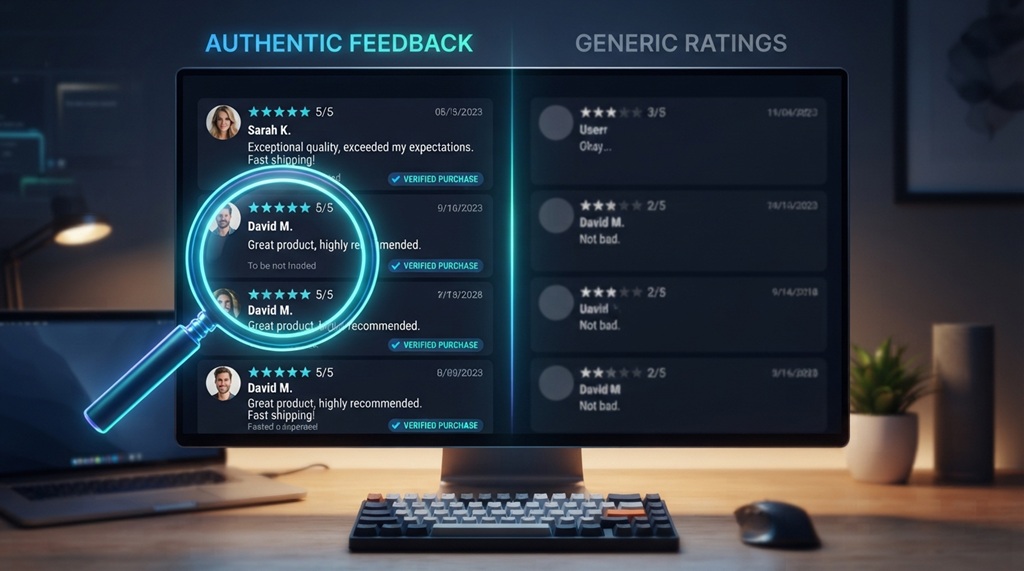
Honest software reviews share real user experiences, disclose sponsorships, and include both pros and cons. Fake or paid reviews often hide these details. They focus only on praise. If you know what to look for, you can avoid wasting money on tools that don’t deliver.
Software shopping has changed a lot. Every product now has hundreds of reviews online. Some are genuine. Many are not. Companies pay influencers. They also write their own five-star reviews under fake names. This makes it hard to trust what you read.
This guide will show you the exact signs of an honest review. You’ll also learn where to find trustworthy sources. By the end, you’ll know how to make smarter subscription decisions.
Why Fake Software Reviews Are So Common Today
Fake reviews exist because they work. Positive reviews boost sales fast. Many software companies know this. So they invest in review manipulation instead of product improvement.
The Hidden Economy of Review Manipulation
Behind the polished star ratings of modern software lies a sophisticated, multi-million-dollar review manipulation industry designed to distort buyer perception. Driven by intense SaaS market saturation, desperate vendors frequently purchase bulk artificial five-star ratings or incentivize influencers with complimentary enterprise licenses in exchange for unearned praise. As the sheer volume of competing digital tools explodes, the pressure to fake credibility often triumphs over genuine product development. Uncovering these deceptive marketing tactics allows you to cut through artificial hype and evaluate digital solutions objectively. Once you master identifying genuine user sentiment, you can confidently navigate selection criteria by exploring how to choose the best SaaS tool for your business to secure software that truly scales your operational workflow.
Why This Hurts Buyers
Fake reviews mislead people into bad purchases. You might subscribe to a tool that doesn’t fit your needs. You could also miss better alternatives that got buried under fake five-star noise. This costs you time and money.
Key Signs a Software Review Is Honest
Honest reviews share specific traits. Once you know these signs, spotting fake content becomes much easier.
It Mentions Both Strengths and Weaknesses
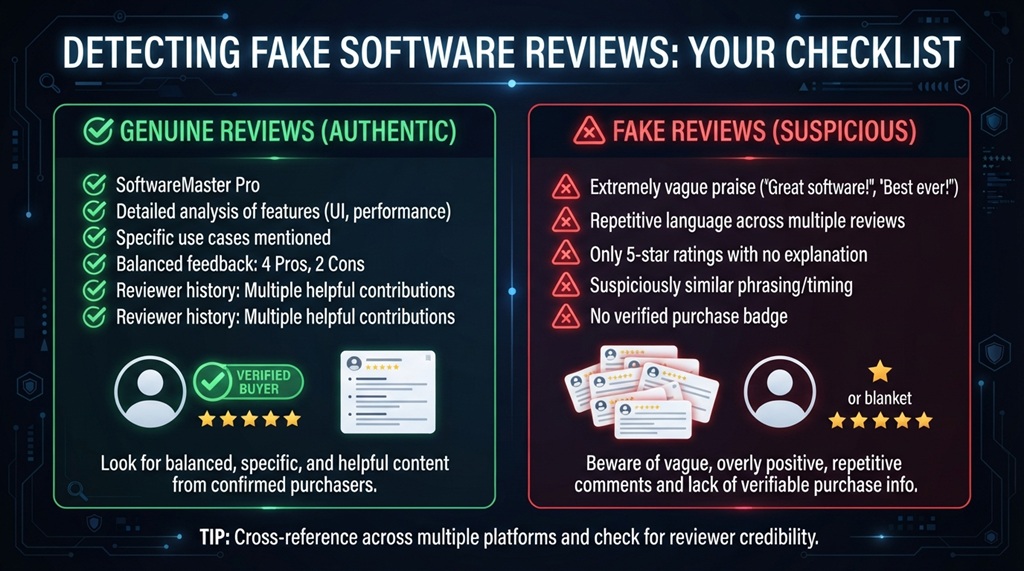
No software is perfect. Every honest reviewer admits this. If a review only lists benefits, be suspicious. Real users almost always mention at least one drawback, like a steep learning curve or a missing feature.
It Includes Specific Details
Vague praise is a red flag. Phrases like “this tool changed my life” say nothing useful. Honest reviews explain exactly how the software helped. They mention specific tasks, workflows, or results.
It Discloses Sponsorships or Free Access
Trustworthy reviewers tell you if they got the product for free. They also disclose paid partnerships. This transparency builds trust. Without it, you can’t tell if the praise is genuine or paid for.
It Matches the Reviewer’s Actual Use Case
A good review explains who the software is for. It also explains who it isn’t for. This context helps you judge whether the tool fits your own needs, not just someone else’s.
Where to Find Trustworthy Software Reviews
Some platforms are more reliable than others. Knowing where to look saves you time and reduces risk.
Independent Review Sites With Verification Systems
Sites that verify purchases or company accounts tend to have fewer fake reviews. Look for platforms that confirm the reviewer actually used the software. This step filters out a lot of noise.
Niche Communities and Forums
Communities built around specific industries often give more honest feedback. People in these groups aren’t trying to sell you anything. They just want to help each other choose better tools.
Video Reviews With Screen Recordings
Video content is harder to fake convincingly. When a reviewer shows their actual screen while using the software, you get real proof. This is one of the most underused ways to verify honesty, since text reviews can be written by anyone, but a live screen recording shows the product actually working as described.
Long-Term User Reviews Over First Impressions
First impressions can be inaccurate. Software might seem great in week one, then show problems by month three. Look for reviews written after months of use. These carry more weight than day-one reactions.
Red Flags That Signal a Fake or Biased Review
Certain patterns almost always point to manipulation. Learning to spot them takes practice, but the signs are consistent.
Overly Generic Language
Fake reviews often use broad, emotional language. Words like “amazing,” “life-changing,” or “a game-changer” without specific examples are common warning signs. Real users tend to describe actual features and outcomes.
A Flood of Reviews in a Short Time
If a product suddenly gets hundreds of five-star reviews within days, that’s suspicious. Organic reviews usually build up gradually over time. A sudden spike often points to a paid campaign.
Reviewer Profiles With No History
Check the reviewer’s profile if the platform allows it. A brand-new account with only one review is a red flag. Genuine users typically leave reviews across multiple products over time.
No Mention of Pricing or Support Issues
Real software experiences almost always include a comment about pricing, customer support, or updates. If a review skips these topics entirely, it may be incomplete or written without real usage.
Practical Steps to Verify a Review Before You Subscribe

Verification doesn’t need to be complicated. A few simple checks can protect you from bad decisions.
Cross-Check Reviews Across Multiple Platforms
Don’t rely on just one site. Compare reviews on the company’s website, third-party platforms, and social media. If the sentiment stays consistent, that’s a good sign.
Search for the Reviewer’s Other Content
If a reviewer has a blog, YouTube channel, or social profile, check their history. Look for patterns of honesty, like criticizing other products they’ve tried. This shows they’re not afraid to be critical.
Try the Free Trial or Demo Yourself
Nothing replaces hands-on testing. Most software companies offer a free trial or demo. Use it to test the core features that matter most to you before committing to a paid plan.
Ask in Communities You Already Trust
Post your question in a forum or community you already trust. Ask people who have actually used the product. Real answers from real users often beat polished marketing copy.
A Simple Checklist for Evaluating Any Software Review
Use this quick checklist before trusting any review:
- Does it mention at least one downside?
- Does it include specific details, not just vague praise?
- Does the reviewer disclose free access or sponsorships?
- Is the review recent and based on real, ongoing use?
- Can you verify the reviewer’s identity or history?
If a review checks most of these boxes, it’s likely honest. If it checks none, treat it with caution.
Frequently Asked Questions
How can I tell if a software review was paid for?
Look for a disclosure statement, usually near the top or bottom of the review. If there’s no disclosure but the review reads like an ad, that’s a warning sign. Paid reviews also tend to avoid mentioning any downsides.
Are star ratings alone reliable?
No, star ratings alone don’t tell the full story. A product can have a high average rating due to fake reviews or incentivized feedback. Always read the written content behind the ratings.
What’s the best type of review to trust?
Long-term, detailed reviews from verified users tend to be the most reliable. Video reviews with screen recordings are also strong, since they’re harder to fake. Community discussions from unbiased users are another solid source.
Should I trust reviews on the software company’s own website?
Be cautious with testimonials posted directly on a company’s site. These are often hand-picked to show only positive feedback. Cross-check them with independent platforms before making a decision.
How many reviews should I read before subscribing?
There’s no exact number, but reading at least five to ten reviews from different sources gives a more balanced picture. Focus on quality and detail over quantity alone.
Conclusion
Spotting honest software reviews takes a bit of practice, but the signs are learnable. Look for balanced feedback, specific details, and clear disclosures. Avoid reviews that only praise the product without any criticism.
Before you subscribe to any tool, cross-check multiple sources. Test the software yourself whenever possible. This simple habit can save you money and help you choose tools that truly fit your needs.





Leave a Reply