

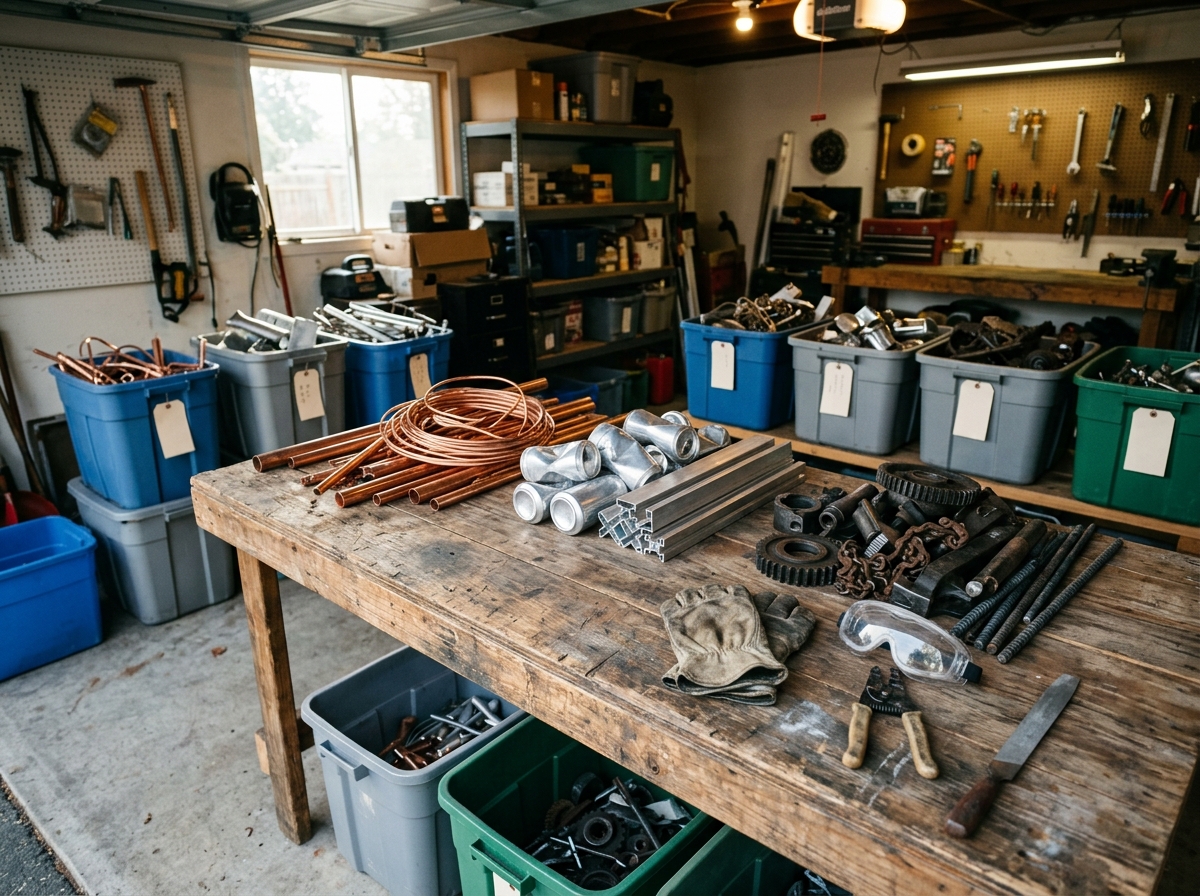
A garage corner full of old bike frames, dead appliances, and tangled wire looks like clutter to most people. To a scrapyard, it is a weighed and priced commodity — but only if it arrives sorted, clean, and in a form the yard can process. One of the most common stumbling blocks is oversized aluminum: a long extrusion or a bulky frame that will not fit into a sorting bin or a buyer’s scale. Learning to cut aluminum with hacksaw bestusatools.com/hand-tools/hacksaw/best-angle-for-using-a-hacksaw-on-aluminum/ techniques, for example, lets you break down stubborn pieces by hand without power tools. This guide covers how to sort, clean, and prep your scrap so you get paid fairly instead of being turned away.
Quick Answer
Turn scrap metal into cash by separating it into categories (aluminum, copper, brass, steel, and so on), removing non-metal attachments and contaminants, and cutting oversized pieces down to a manageable size. Clean, sorted, single-material scrap earns the highest price per pound, while mixed or dirty loads are either rejected or paid at a lower rate. Call your local yard first, because accepted categories, size limits, and preparation rules vary by location.
Key Takeaways
- Sorting by metal type is the single biggest factor in your payout, because mixed loads are downgraded or refused.
- Removing screws, plastic, rubber, and other non-metal attachments raises the value of almost every category.
- Sizing matters: many yards reject pieces that are too long or too heavy for their equipment, so cutting scrap down is often necessary.
- Never burn insulation off copper wire or mix in sealed containers — both are health hazards and illegal in many areas.
- Prices are set by weight and market rates, so weigh your load at home and call ahead to confirm current pricing before you haul it in.
Why Sorting Is Where Most of Your Money Is Won or Lost
Scrapyards pay by the pound, and the price per pound depends almost entirely on what metal you are selling. A pound of clean copper can be worth many times a pound of steel. When you dump everything into one bin, the yard has two choices: pay you the lowest category’s rate, or reject the load. Neither works in your favor.
Sorting is not complicated once you know the basics. The main categories you will encounter at a typical yard are:
- Aluminum — beverage cans, window frames, lawn chairs, siding, and cast parts
- Copper — wire, pipe, tubing, and motor windings
- Brass — faucets, valves, fittings, and decorative hardware
- Steel and iron — appliances, rebar, tools, and structural scrap
- Stainless steel — sinks, pots, and some appliance housings
- Lead, zinc, and other metals — batteries, wheel weights, and specialty items
A quick home test for unknown metals
A magnet is your most useful sorting tool. Steel and iron stick to a magnet; aluminum, copper, brass, and stainless steel generally do not (though some stainless grades are weakly magnetic). If a magnet does not stick, check color and weight: copper is reddish and heavy for its size, brass is yellow-gold, and aluminum is light silver. When you are unsure, keep the piece separate and ask the yard to identify it.
Keep “clean” and “dirty” separate
Most yards price metal in two tiers. “Clean” means a single metal with no attachments. “Dirty” or “mixed” means the metal still has screws, plastic, rubber, or other materials attached. The price gap can be substantial. A clean copper pipe and a copper pipe with a brass fitting and a rubber washer are not the same product to a buyer. Sorting each metal, then stripping attachments, moves your material from the lower tier to the higher one.
Cleaning Scrap Without Wasting Your Time
Cleaning scrap is a trade-off between effort and payout. You want to remove anything that reduces the price or causes rejection, but you do not want to spend three hours preparing material that earns a few extra cents a pound.
Prioritize cleaning where the payoff is real:
- Copper wire: Stripping thick-gauge wire to bare bright copper can roughly double its value compared to insulated wire. Stripping thin, tangled wire is usually not worth the time.
- Appliances: Removing the compressor, motor, and any non-metal parts turns a mixed appliance into separate, higher-value streams.
- Aluminum: Pull out steel screws, plastic handles, and rubber seals. Iron contamination is the most common reason aluminum gets downgraded.
- Brass fittings: Remove any attached steel or plastic components so the brass reads as clean.
What you should not do is equally important. Never burn plastic or rubber insulation off wire to get to the copper. Burning releases toxic fumes, is illegal in many jurisdictions, and yards may refuse burnt wire anyway. Do not pressure-wash scrap containing oils or fluids into storm drains. And do not leave fluids, refrigerants, or sealed pressurized containers in appliances you sell.
Sizing Scrap: When and How to Cut It Down
Most yards have a maximum size and weight for what they will accept by hand. A piece that is too long for the shear or too heavy for the scale becomes a problem you have to solve before you can sell it. Two practical options exist: reduce the size yourself, or ask the yard whether it accepts oversized material at a reduced rate.
For smaller material — aluminum extrusions, thin tubing, wire bundles, and sheet — a hacksaw does the job without electricity, noise, or sparks. The technique matters more than the tool. Use a blade with the right tooth count for the metal thickness, apply steady pressure on the forward stroke, and let the blade do the work rather than forcing it. A fine-tooth blade (around 24 to 32 teeth per inch) cuts thin aluminum and tubing cleanly, while a coarser blade handles thicker stock faster but with a rougher finish. Clamping the piece securely and cutting close to the clamp reduces vibration and blade snagging, which is the most common cause of broken blades on thin-walled material.
For steel, iron, and thick sections, a hacksaw is slow and impractical. An angle grinder, reciprocating saw, or bolt cutters are better choices. If you do not own power tools, some yards will accept long pieces uncut but pay a lower rate, so it is worth asking before you spend an afternoon sawing.
A size checklist before you load up
- Measure the longest piece. Many yards cap hand-accepted items around a few feet; longer material may need cutting or may be rejected.
- Weigh the heaviest piece. Anything too heavy to lift safely may be refused at the scale.
- Confirm blade and tool choice before cutting: fine teeth for thin aluminum, coarser for thicker stock.
- Deburr sharp cut edges with a file so you can handle the pieces safely.
How to Prep Different Categories for the Best Price
Each metal category rewards slightly different preparation. The table below summarizes the main categories, typical preparation, and the mistakes that cost you money.
| Category | Typical Prep | Common Mistake That Lowers Value |
|---|---|---|
| Aluminum | Remove steel screws, plastic, and rubber; keep cans separate from extruded or cast aluminum | Mixing iron bolts and plastic handles into the load |
| Copper | Separate bare bright wire from insulated wire; remove brass fittings | Burning insulation or mixing brass into copper |
| Brass | Remove steel and plastic attachments; keep clean fittings together | Selling brass-plated steel as solid brass |
| Steel and iron | Remove non-metal parts; separate heavy melt from light sheet | Leaving fluids or sealed containers inside appliances |
| Stainless steel | Keep separate; verify it is not plated or magnetic | Mixing stainless into regular steel, losing the higher rate |
Two habits pay off across every category. First, keep metal dry and free of dirt, oil, and paint where you reasonably can, because contamination is a common reason for downgrades. Second, bag or box small pieces — loose screws and wire fragments spill, get lost, and slow down the yard.
What to Expect at the Yard
Once your scrap is sorted, cleaned, and sized, the transaction is usually straightforward. You drive onto a scale, the attendant weighs your vehicle, you unload into the appropriate bins, and you weigh again. The difference is your net weight, which is multiplied by the current price for each category. Payment is often cash or a check, and some yards require identification or have rules about certain items.
Two practical points save frustration. First, call ahead to confirm which categories the yard currently accepts and how it wants them separated — rules change with market conditions. Second, understand that prices fluctuate. The rate you were quoted last month may not be the rate today, and that is normal. Weighing your load at home before you go lets you sanity-check the yard’s numbers and catch obvious errors.
Frequently Asked Questions
How do I know what type of metal I have?
Start with a magnet. If it sticks, you likely have steel or iron. If it does not, compare color and weight: reddish and heavy suggests copper, yellow-gold suggests brass, and light silver suggests aluminum. When in doubt, keep the piece separate and let the yard identify it.
Is it worth stripping copper wire myself?
It depends on the wire. Thick-gauge wire strips easily and bare bright copper earns significantly more than insulated wire, so it is usually worth the effort. Thin, tangled wire is slow to strip and often not worth the time — sell it as insulated wire instead.
Can I use a hacksaw to cut all my scrap metal?
No. A hacksaw handles thin aluminum, tubing, wire, and small sections well, but it is impractical for thick steel, cast iron, or large structural pieces. For those, use an angle grinder, reciprocating saw, or bolt cutters, or ask the yard whether it accepts oversized material.
Why was my scrap rejected or downgraded?
The most common reasons are contamination and mixing. Steel bolts in aluminum, plastic and rubber left on fittings, burnt wire, fluids inside appliances, and sealed containers all cause rejection or a lower price. Sorting and cleaning before you arrive prevents most of these problems.
Do scrapyards pay different prices for the same metal?
Yes. Prices vary by yard, by region, and by market conditions, and they change over time. Calling a few local yards before you haul your load is the simplest way to compare rates and confirm what each one accepts.
What should I never put in my scrap load?
Avoid sealed pressurized containers, appliances still holding refrigerant or fluids, burnt wire, and anything radioactive or hazardous. These items pose safety risks and are refused or regulated in most areas.
Conclusion
Getting paid well for scrap comes down to three habits: sort by metal type, remove non-metal attachments, and size pieces so the yard can handle them. Start by separating aluminum, copper, brass, steel, and stainless into distinct piles, then clean off screws, plastic, and rubber wherever the effort pays off. Cut oversized aluminum and light tubing down by hand with a fine-tooth hacksaw, and use power tools only where a hacksaw is impractical. Before you load up, call your local yard to confirm pricing and rules. A little preparation at home consistently turns a low-value mixed pile into a fair, by-the-pound payout.




Leave a Reply